What is a Forest School?
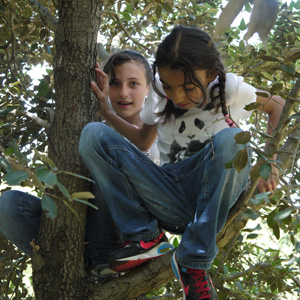
Forest School is a child-led learning process through play that takes place over a period of time using a natural space like a forest.
Forest School offers children the possibility to participate in woodland tasks that are manageable and achievable. Taking into account each child as an individual with different needs and different learning tempos.
Its approach focuses on the process of learning rather than the outcomes and its ethos is to support, encourage and motivate children to be empowered to take responsibility for their own learning and development.
Children are supported and set up to achieve their tasks and to take appropriate risks through developing trust in themselves and in others.
Research has found that the benefits for young people of all backgrounds and different ages attending Forest School are:
- Increased self-esteem, self-confidence and self-belief
- Development in social skills and awareness of their actions towards others
- Increased language and communication skills
- Increased motivation to participate and concentrate
- Improved physical stamina and development of gross and finer motor skills
- Development of respect for themselves and others and their connection to nature.
- Increased ability to problem solve
- Increased knowledge and understanding - the children develop an interest in the natural surroundings and respect for the environment.
Problem solving - our Forest School leader reports:
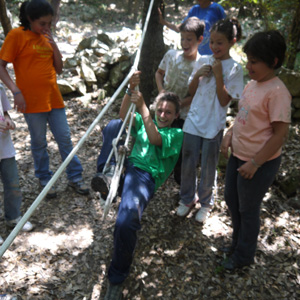
D. asked if he could have some ropes to make a swing. S. approached me a moment later with the same question.
I had only one to give out and both children wanted it. I asked both children if they could
think of a solution. D. answered: 'She can have the ropes, I know what I can do'. To my amazement D. had
thought of a wonderful creative idea to make a swing...
Where did it originate?
In the 1950s the post war baby boom forced the people in Sweden to look for a different resource, as the schools were full. Hence some children were taken out into nature. It had such a profound effect on the children that they ran a thirteen-month study. Results were that children could concentrate much longer, were happier and more content in comparison to the kindergarten children in the city. They were also more balanced and had more ability to socialise with others. They also had fewer sick days, due to being outdoors all the time and therefore developing a stronger immune system.
In the 1980's it also spread to Denmark where the forest school concept was established for under 7s. At the same time other European countries also adopted the same scheme. In the mid 1990s some nursery teachers from Somerset and from other areas in UK visited these Danish forest school settings and brought this concept to the UK where it actually took on a wider form not just for the under 7s but for all age groups. Since then many schools, early years settings, environmental projects, community groups and families have adopted the same scheme. It has also been successfully offered to children with learning disabilities or other forms of disabilities. Today there are now 140 Forest Schools throughout the United Kingdom as the learning method has become more recognized and valued.
What is a typical forest school holiday experience session?
The first forest school session will vary from subsequent ones, as we will invite the parents to participate with their children. This ensures that everyone knows the area where we will be working and though forest school experience is all about child-centered learning, it is important to set ground rules with the group so that everyone is safe.
At the beginning of every session children are reminded of three important points:
- Look after yourself.
- Look after the forest, its plants and animals
- Look after each other and stay within the boundary.
Different boundary games are played such as '1, 2,3 Where Are You?' to establish physical and behavioural boundaries.
This introductory session in the woodland will entail exploring the site, exploring boundaries, discussing and practising safety and hygiene procedures and learning the routines.
Typical Forest School Holiday Experience Routine
Although it should be noted that no two sessions are alike and even a planned routine is likely to change to meet children's needs and spontaneous interests.
| 09.00 | Children are met in front of the Guarnieri Church, their clothes and shoes are checked to see if they are appropriate - sun cream and insect repellant applied and sun hats on. |
| 09.15 | Walk to the woodland entrance and first activity is introduced to get into a sensorial experience of the forest whilst we walk to base camp |
| 09.30 | Arrive at base camp, toilet shown and hands are washed before sitting down for an initial sharing snack at stone circle. |
| 09.45 | Exploration of the health and safety guidelines and the three rules. Play a boundary game |
| 10.30 | Set the scene for the day's activities |
| 10.40 | Observation of children engaged in learning activities - as sessions are child led, the activities could include:
|
| A snack and a lunch is usually taken during this session but children help themselves when they are ready so as not to disrupt their deep level learning experiences. | |
| 13.30 | Begin to bring the session to a close |
| 13.40 | Review the day - a variety of methods are used and children are asked what they would like to experience in the following session. |
| 14.00 | Clear the site and make our way back |
| 14.30 | Arrival at Guarnieri Church for meeting with parents |
How does the group stay safe?
Safety for everyone in our care is of paramount importance to the Forest School Holiday Experience. We carry out risk assessments for every aspect of Forest School, from individual activity assessments to daily site checks before any group arrives.
We have clear policies and procedures to ensure that everyone involved is working from the same guidelines. The Forest School leader has been trained to dynamically evaluate as the sessions take place and will always ensure children are not only safe but feel secure in the woods.
The Forest School leader will also make certain that clear safety guidelines are explained and adhered to as required for the environment or activities that are taking place. Whenever possible the group will be encouraged to get involved in setting the safety rules for the camp and surrounding areas. The Forest School Holiday Experience finds this helps children make sense of and see clearly the reasons behind the rules.
One of the core aspects of a Forest School Holiday Experience is to equip children and young people with self-esteem and confidence to be able to assess risks for themselves and make appropriate decisions.
Groups will run with a high ratio of adults to children to allow for close observation but minimal intervention to support this goal.
The leader is qualified in first aid and carries appropriate first aid kit, mobile phones and location details. Any assistant and volunteers who work for Forest School Holiday Experience are always under the direct supervision of a Forest School Leader. The Forest school leader is CRB checked.
Forest School is designed to be a stimulating environment. Woodlands by their very nature are wild places and not sterile or totally risk-free. We don't want to take the thrill and adventure out of an important experience.
Risks can be minimised, but they cannot be eliminated altogether, and health and safety concerns need to be balanced against the potential benefits of any activity.
Children, young people and adults will suffer the occasional bumps, cuts and bruises, which are a part of everyday life. The application of common sense will ensure that everyone is as safe as they can be, whilst enjoying all the physical and intellectual challenges of Forest School!
If you have any concerns about your group or child's safety please contact us and we will be happy to answer your questions. All Forest School Holiday Experience risk assessments, policies and procedures are contained in our H&S book and are frequently updated. If you wish to view them or have a copy for your organisation we are pleased to help.
What is the role of the Forest School Leader?
Forest School Leaders are responsible for the management of the group, discipline and safety. Their role is to provide a safe place for play with managed risks, achievable task. The leader of Forest School sessions has passed the OCN Level 3 in Forest School Leadership in the UK and adheres to the current Health and Safety at work guidelines. The leader is insured.
It is the responsibility of the Forest School leader to:
- Plan sessions and staffing ratios
- Be responsible for the groups.
- Necessary risk assessments are done
- Liaise with user groups and evaluate sessions.
- Have contact numbers and medical forms available during each session.
- There has been a sweep of the Forest School area to check for loose branches and litter.
- The Forest School leader has a CRB clearance. The layout of Forest School sites and session planning enables constant sensitive adult supervision of all children and vulnerable persons. The assistant and children can be seen at all times. The assistant informs the Forest Leader that he/she is accompanying a child if that child needs help. If not then children can use the facilities on their own whilst the forest leader is able to keep an eye from a distance. This then applies to all ages.
- Tools are in a secure container and are in a clean and usable condition.
- Trainees and volunteers are given all relevant information and training before sessions.
- The leader also has overall responsibility for the security and maintenance of all kit (1st Aid kit; Tools; Kit bag). They will keep all written records up to date, and secure. All sensitive or personal information is confidential.
What is the role of teachers, group leaders or parents?
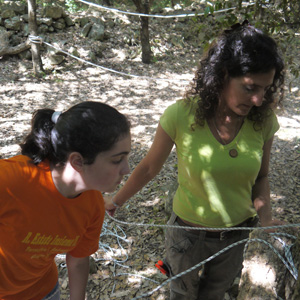
As the forest school implies a new way of working, more child-led, it is important in the initial stages for the teaching staff to hand over elements of responsibility to trained Forest School leaders. Teaching staff are encouraged to discuss any concerns about how this will work and the specific roles of the adult helpers before the start of the programme. Teachers have the opportunity to see how children may flourish when learning out of the classroom, and their feedback is valuable.
Accompanying teachers, group leaders or parents are expected to help supervise small groups of children under the expertise and guidance of the Forest School leader.
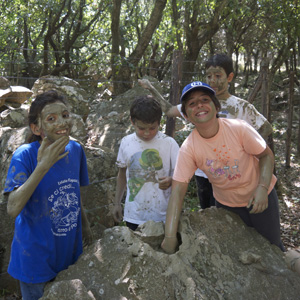
Forest School Holiday Experience understands that it is sometimes difficult to not step in and stop children getting soiled, dragging sticks and jumping from stone to stone when these things would sometimes be discouraged. At Forest School these are important and essential elements of a fuller experience and connection to the natural world and vital in increasing body-awareness, motor skills, self-confidence, self-esteem. Unless you believe a child to be in danger please remain calm about mucky faces and encourage them in their explorative journeys. it's only dirt!
Forest School can be a good opportunity for staff or parents to get to know children or young people away from the confines of their usual environment. It is very useful to us if you can feedback on the children's experiences.
To plan future sessions it is essential for us to have additional eyes and ears in the woods. The more information we have about the way a child plays or interacts with nature the better informed we become. So you play an important role. When we can identify the way an individual likes to learn or what sparks their interest, we can use these preferences to capture their attention and imagination.
What to wear and what to bring
'Please nothing new'
To ensure a positive experience at Forest School Holiday Experience it is important that children and young people are dressed for all kinds of weather accordingly. Sicily tends to have a hot climate in the summer and showers mainly occur in autumn and winter though with our climate change all is possible. So be prepared!
This means long trousers and sturdy boots even in the summer (tennis shoes are not recommended)!
Activities take place in all weathers throughout the year so it is recommended that participants come with fleece and dressed in layers for the rest of the seasons.
Here is a list of what to wear and to what to pack in the rucksack:
Always have a water bottle with you, refill is provided by the school. Forest School makes everyone hungry. So please bring a healthy balanced snack and lunch in an airtight container.
- In the spring: Hiking shoes or sturdy shoes, fleece, extra change of clothing, extra socks, sun hat, rain proofs,
- In the summer: Hiking shoes or sturdy shoes, extra T-shirt, sun hat, sun cream, insect repellent, light cotton cardigan, if needed sunglasses
- In the autumn: Hiking shoes or sturdy shoes, long T-shirt, sun hat, light cotton cardigan or fleece, rainwater proofs
- In the winter: Hiking shoes or sturdy shoes, thermal underwear, extra pullover and/or fleece, fleece scarf, fleece hat, gloves
We recommend that accompanying parents or teachers come appropriately dressed as well.
Please ensure children do NOT bring money, mobile 'phones, any valuables or knives with them.